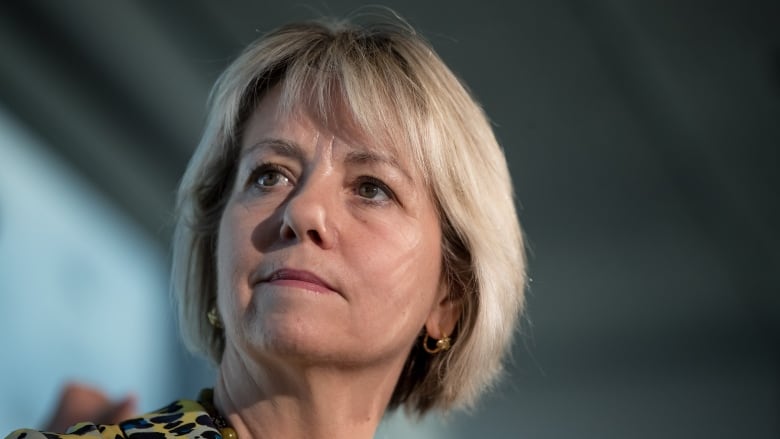
Luck and early preparation flattening B.C.’s COVID-19 curve, but officials urge residents to ‘not let up
https://www.cbc.ca/news/canada/british-columbia/covid-19-bc-update-april-6-1.5523554

肺炎疫情:新冠病毒到底哪来的?科学界的几种说法
Luck and early preparation flattening B.C.’s COVID-19 curve, but officials urge residents to ‘not let up
https://www.cbc.ca/news/canada/british-columbia/covid-19-bc-update-april-6-1.5523554

肺炎疫情:新冠病毒到底哪来的?科学界的几种说法
1. Which branch predominates to the north in Europe, which to the south, and which to the east?
2. Which hypothesis appeals more to you: the “war” hypothesis or the “peace” hypothesis? Why?
3. Which word entered the English language through the German invasions and which through the Norman invasion?
4. What is the title of the book in Figure 5-20? Type the letters intro Google Translate?
Please watch the following videos and reading pg. 146-153 of Cultural Landscape for the questions below, thanks!
1. What forms of power would have moved boats 2,000 years ago?
2. Based on Figure 5-3, which four other languages with at least 5 million speakers belong to the same language family, branch, and group as English?
3. Sino-Tibetan is the second-most widely used language family, but it appears on Figure 5-6 to encompass a smaller land area than several other language families. Why is this the case?
4. Most languages are named for regions or countries. For example, based on their names, how would you expect the distribution of Austronesian and Austro-Asiatic to differ?
1. In what ways might Amish people need to interact with popular culture?
2. What steps might fast-food restaurants take to reduce adverse impacts on the environment?
1. What was Khrushchev trying to prove in the “Kitchen Debate”?
2. How did the U-2 spy plane incident affect intelligence gathering?
3. Why were Soviet Nuclear missiles a bigger threat to the United States when placed in Cuba?
4. What did Khrushchev hope to gain with “de-Stalinization”? Did he succeed?
5. What effect did it have on nationalism in satellite states?
6. Why were the Cuban people willing to follow Castro even into communism?
7. What were the short- and long-term consequences of the Berlin Wall?
8. Why did the United States believe that WWIII would begin in Berlin?
9. Why did Khrushchev support “peaceful coexistence”? Did it change the Cold War as he hoped?
10. How might the U.S. embargo and quarantine of Cuba affect its image across Latin America?
Please watching the videos and do the readings for the following questions:
1. In your opinion, based off of the readings, should the United States and the USSR have invested so much money in expanding nuclear technology that they could not use without world-wide devastation?
2. What were the differences between Stalin’s version of communism and Mao’s?
3. How did the Sino-Soviet split affect US decision making?
4. Why wasn’t Korea granted full independence immediately following WWII?
5. Should UN troops have stopped at the 38th parallel or tried to reunite Korea?
6. Was the battle by proxy a reasonable way to prevent WWII?
7. How did the arms race affect national security concerns in Europe and Asia?
Example Articles:
CURRENT EVENTS WORKSHEET
DATE DUE: Usually every Friday
Directions: Find an article either in the newspaper or online from a newspaper source, CBC, BBC, The Guardian, Time.com, USA Today, The New York Times, etc., or any other reputable national or local source. Read the article and fill out the statements or answer the questions below. You may not use articles on Entertainment/Gossip or Sports. Please find and read about important issues in our world today. Because this is a current events assignment you are to choose an article that is no more than a week old from when the assignment is given. Read the Rubric at the end of the worksheet to complete all the requirements for this assignment.
Structure of the Presentation:
Topic of Article: _____________________________________________________________________
Title of Article: ______________________________________________________________________
Source: _____________________________________________________________________________
WHO is this article about? ____________________________________________________________
WHAT is this story about? List four important facts from your article.
1. ________________________________________________________________________________________________________________________________________________________________________________________________________________________________________________
2. ________________________________________________________________________________________________________________________________________________________________________________________________________________________________________________
3. ________________________________________________________________________________________________________________________________________________________________________________________________________________________________________________
4. ________________________________________________________________________________________________________________________________________________________________________________________________________________________________________________
WHEN did this story take place?
________________________________________________________________________________________________________________________________________________________________
WHERE is this event or issue occurring? (Specify city, country, region, etc.)
________________________________________________________________________________________________________________________________________________________________
WHY is this story important?
________________________________________________________________________________________________________________________________________________________________
CONNECT the article. What does it have to do with you? Can it be connected to anything we learned or are learning about in class?
_______________________________________________________________________________________________________________________________________________________________________________________________________________________________________________________________________________________________________________________________
Grading will be based on the following rubric:
4 – Entire Current Event assignment displays the following requirements for each question/statement above:
a. Demonstrates thoughtfulness, preparation, and accuracy.
b. Reflects real understanding of the story and the issues.
c. Follows directions.
d. Is complete, neat, and includes entire article.
e. Asks and answers a provocative (for discussion purposes) question.
3 – Current Event assignment is complete but lacks 2 of the above requirements.
2 – Current Event assignment lacks 3 of the requirements.
1 – Current Event assignment lacks 4 of the requirements.
0 – Current Event assignment is late (excepting all day absence) or lacks 5 or more of the above requirements.
Example article: https://www.cnn.com/2020/02/25/business/moderna-coronavirus-vaccine/index.html

Questions for homework:
1. Why was the United Nations created after the failure of the League of Nations.
2. How did the Great Depression of the 1930s lead to the Bretton Woods system.
3. Explain in your own words what the IFM and World Bank is about. In your opinion, what are the positives and negative perceptions of the two organizations.
Hi everyone, here is the video for D-Day near the end of world war 2
Please also do your readings for Chapter 5 and the study guide A (Due this Friday) and B (Next Friday), a reminder that we will have a test next week on Wednesday or Thursday! Thanks!
Questions for readings:
1. How did WWII affect European civilians? What were the implications of the East/West divide into Spheres of Influence? What were the immediate effects of decolonization for people in the Middle East, India, and Southeast Asia?
2. How did the victorious Allies settle land disputes at the end of WWII? What were the short-term effects of occupation zones? What were the geographic consequences of decolonization from 1945-1950?
3. In your own words, based off of the textbook, why was there an increase in regional organizations in the post-war era? What were the ramifications of the linkage between cold-war politics and economics?
Here’s the assignment for today, please feel free email me if you have any questions, thanks!
Questions (Please complete them for homework if you did not finish them during classroom time, thank you!)
1. Looking carefully at the body language in the Big Three photograph, what does the picture tell you about each man. What does it tell you about the relationship between them.
2. Compare Stalin’s Two Worlds speech of 1946 to Churchills Iron Curtin Speech, what are the similarities and differences between the two in predicting or outlining the future of the world.
3. Using the map on pg 124 Chapter 6, what connections can you make between the policy of containment, the Truman Doctrine, and the Marshall Plan.
Hi everyone,
here’s the PowerPoint slides and resource/worksheet for today’s class. A reminder that you should start filling in chapter 4 guided notes starting today and I will collect this at the end of the unit on folk and popular culture. Please also study the terms and concept list for the test at the end of the chapter.
For today’s homework, please complete 4.1 learning guide for tomorrow’s class, thanks!
PowerPoint-
Chapter 4 Study Guide-
Also, you can find the answers in your CounterPoints textbook as well~
Please watch these videos and answer the questions on the worksheet, thanks!
Please download and complete the study guide above and hand in to Mr. Sha, thanks!
Please download the following vocabulary and study guide sheet for chapter 2, make sure you hand in to Mr. Sha, thanks!
Winnipeg General Strike- please watch the video and answer Post-WWI worksheet
PowerPoint-After WWI
Imagine that you are a reporter during World War 1. What kind of writer would you be? What type of things would you like to write about? In this assignment you will write as if you were a reporter during the War. First, you have to decide if you will be writing from the perspective of a reporter on the battle field or at the Homefront. Then you have to give your newspaper a name such as the “New York Times”. Your newspaper will contain pictures and events from one battle in WWI history. You need to write the events as if the events you described happened just a few days ago. Your newspaper should be a minimum of 200 – 300 words.
Your grade will be determined by how well you describe the events, how many details you provide in your articles and the thoroughness of your research. Each part should also have a headline. Grammar, spelling and punctuation errors will result in a loss of points for each individual. There should be no excess white space in your newspaper. You may choose to include pictures with captions, political cartoons, advertisements, etc. to complete your newspaper. All pictures, political cartoons, advertisements, etc. must be relevant to the time period.
You must use 2 resources other than your textbook for the newspaper. Internet sources are acceptable as long as they come from reputable academic sites and are properly cited. (Do not cite Wikipedia as a source) On a separate sheet of paper you need to list your resources in a works cited page. Failure to attach a works cited page will result in the loss of one letter grade.
The best way to structure a newspaper article is to first write an outline. Review your research and notes. Then jot down ideas for the following six sections. Remember, this is just a foundation upon which to build your story.
I. Lead sentence
Grab and hook your reader right away.
II. Introduction
Which facts and figures will ground your story? You have to tell your readers where and when this story is happening.
III. Opening quotation
What will give the reader a sense of the people involved and what they are thinking?
IV. Main body
What is at the heart of your story?
V. Closing quotation
Find something that sums the article up in a few words.
VI. Conclusion (optional—the closing quote may do the job)
What is a memorable way to end your story? The end quote is a good way to sum things up. That doesn’t always work. If you are quoting more than one person with different points of view in your story, you cannot end with a quote from just one of them. Giving one of your interviewees the last word can tilt the story in their favor. In this age of the Internet, you can also end your story with a link to more information or even your own behind-the-scenes blog post.
Please take a look at the sample newspaper here.
https://www.makemynewspaper.com/
Follow the instructions said in class and feel free to ask any important questions, thanks!
How to do citations for MLA format
Making a Newspaper Website (Please use this website!)

Here’s a link to several letters written by soliders to their homes during WWI.
Click to access Letters%20from%20the%20Trenches%20SAMPLE.pdf
Click to access letters-from-the-first-world-war-1915-3-trenches.pdf
http://spcoll.library.uvic.ca/schoolnet/digicol/pearkes/plv5/trenches.htm
Assignment 1- Life in the Trenches and at Home
For this assignment, imagine that you are a Canadian soldier participating in World War 1. You are living in or near the trenches in France or Belgium. Your task is to write a letter home to your husband/wife telling him/her about your life in the trenches.
You are to write a short letter (200 words min) from the perspective of a Canadian soldier fighting in the trenches in World War 1. In your letter, describe his and her experiences at war and at the home-front. Make sure that you outline the living conditions in the trenches and lifestyle/perspectives of the war at home.
In your letter, include at least five specific pieces of information related to the First World War, a battle and the individual’s experiences and emotions: (1) weather, (2) food, (3) moral, (4)health, (5) recent events, (6) other news about friends or information from home, (7) sleeping and living conditions, (8) sounds and (9) your fears. -Your letter must include: dates, sights, sounds, smell, feelings, and thoughts of war. -Try to make your letter sound and look authentic.
Evaluation: Date and to…. /Address
Sights /1
Sound /1
Smells /1
5 Specific Examples of Experiences/Emotions /5
Authenticity/Creativity /3
Total /12×2=24
You can use your notes, textbook, and internet for references, make sure to cite at the end of the assignment, include a title page with your name, date, and class number. A detailed look at Canadian soldiers’ experiences in the Great War, including life in the trenches, is available online on The Canadian Encyclopedia and the Canadian War Museum websites.
Here’s the PowerPoint slides, please study over them for the quiz and test, thanks!
https://docs.google.com/presentation/d/1bOZSWRdo_b7Cq7qwqFlJ5IzOhIVx108GLeuIcHc1qmM/edit#slide=id.p8
https://docs.google.com/presentation/d/1fJW_fs3dQvolTWumCxMRcDhqa57D-2CeWxJoAP-cULQ/edit#slide=id.p5

PowerPoints in Chapter 1 – https://docs.google.com/presentation/d/1NhnjZznvY86xx-jiT9TjRAGdeknLUCAeB5rNfpqw6mY/edit
https://docs.google.com/presentation/d/1vKU2Xdnoh_fsdnI-axugdiLXwH3zBro2O5Lj_AZtkyQ/edit
Question Sheet – https://docs.google.com/document/d/1gnEMGY6tlYPf7yExKeyHDV9MvWNygGB0IVRg4sDf5cw/edit
Questions:
1. Based on the discussions today, give an example of how you, as the owner of a business, might use a 3D aerial image of a place.
2. Give an example of how a government might use such images.
3. On your own, look up examples of the 3 different types of maps we have discussed today. Compare the sizes of the maps, how are they similar, different, and which one do you think is the most/least accuate?
4. Describe the distribution of properties in your own room, use geographic terminology as best as you can.
Click to access 2014-world-population-data-sheet_eng.pdf
Please complete the homework using this data sheet resource above, thanks!
Here’s the video of the assassination of arch duke Ferdinand
Here’s the PowerPoint for WWI, feel free to ask any questions or concerns to Mr. Sha in class, thanks!
Please reading https://www.washingtonpost.com/world/asia_pacific/in-china-one-child-policy-compounds-loss-of-child-for-parents/2013/08/07/063716fe-e877-11e2-a301-ea5a8116d211_story.html?hpid=z4 article for next Monday and take some notes about the theme and main arguments.
Here’s the Human Population Through Time Video
Here’s the Overpopulated Video
Please download the PowerPoint from the link above and study over the important concepts.
Thanks!
Please watch the video and answer the following questions below, make sure you hand in the answer to Mr. Sha, thanks!
1. What was a major drawback to using runners as a means of communication? (5:30)
2. Explain the meaning of stalemate on the Western Front.
3. What was the standard pattern of battle?
4. Who was the new British Commander- in – Chief in 1915, what does the term Going Over the Top mean?
5. What was the crisis of supply in 1915?
6. What important jobs did women do in the war?
7. What was shell-shock, cause and effects?
8. When was the poison gas first used?
9. What happened at the Somme?
10. What was the British plan at Somme?
Introductions to Human Geography PowerPoint
Chapter 1 PowerPoint
https://docs.google.com/presentation/d/1vKU2Xdnoh_fsdnI-axugdiLXwH3zBro2O5Lj_AZtkyQ/edit#slide=id.p5
Here’s the link for the documentary, please answer the required questions provided in class and hand in to Mr. Sha, thanks!
Questions 1#
What are the most significant/important features of World War I that distinguishes this war from other wars?
What are the negative aspects of World War I? List events, stories, and battles mentioned in the video.
What are the technological advances of World War I? List at least 3.
Here’s the link for both articles, please make sure that you answer the 5 W’s and hand your responses in to Mr. Sha next day, thanks!
Climate Change and Armed Conflicts
San Francisco’s Chinatown

Based on your readings in your text book and the resources given to you, your task is to prepare the following sections on your poster. This poster should take the form of a three dimensional model, a series of cartoon frames, pictures, or maps or famous people’s quotes or stories or a combination of these.
1. Location. Draw a series of maps to show important events and places in the Empire. Be sure to elaborate on these places and events and discuss their importance. 20 marks
2. Time line. Choose a minimum of ten and a maximum of 15 time line events you consider important to understand the Empire. Elaborate on these events.20 marks
3. Daily Life. Family Life, work, entertainment, architecture, achievements, art.20 marks
4. Important people: Writers, Historians, Emperors. 20 marks
5. Politics. Causes of political tensions, expansion, power struggle. 20 marks
This project can be done alone or in groups of no more than four students. For this project to be successful, you must do the following:
1. Form a group and plan out what you want to do and who will be doing it.
2. Take notes based on your research and write the ideas in your own words.
3. Do not copy and pretend the work you have plagiarized is yours. You and your entire group will receive a zero (0) mark.
4. Each member of the group is directly responsible for the success of the whole group. If you do not contribute, your group mark will be lowered.
5. If you miss class time while your group is preparing or you are not present during the presentation, your group mark will be lowered. Medical reasons will be excused.
6. In any case, if you know you will not be there on presentation day, you must give your materials to another student who can present your part for you.
7. Marks for each section will be awarded as follows: 1. Oral presentation, based on an introduction, main facts, and conclusion (10 marks). 2. Written work, done neatly and with effort, focussing on a clear theme (10 marks).
100 MARKS TOTAL

About A Place Assignment & Rubric
Here is the assignment outline for our the project – About A Place. The intention of this assignment is for you to choose a place that is special to you, anywhere on the planet, and to do an analysis of the specific location.
You are encouraged to choose a place that connects to our space and place unit, but that is not necessarily required. If you would prefer to do an amazing spot that has been created through different forces such as (ex. Beijing- human feature/urban city) or a glacier (created through erosion of ice) that is fine, but the criteria will change somewhat.
You will analyse the place through a human and physical geographic lens. Use the criteria to guide your research.
Currently, the due date for the assignment is February 3rd.
https://allpoetry.com/poems/about/Geography – website for poems
https://www.thoughtco.com/the-four-spheres-of-the-earth-1435323 – Article
https://www.latlong.net/ – Calculate GPS
PowerPoint Link above ^