Please watch the video above and answer the questions below in the response box. Remember to provide detailed descriptions, examples, and specific events from the video, thanks!
VIDEO ANALYSIS- HOW AL-SHABAAB CREATED A CRISIS IN SOMALIA
Water the following assigned video and summarize the information in one paragraph(who, when, where, why, how, make sure that you also include how Al-Shabaab created the crisis, did they resolve it? if so how?) and list them in the comment section below, thanks!
Discuss the mechanism through which a nation-state can foster the national attachment of its populace. What are examples for such mechanisms in the United States, or in South Carolina?
Provide a definition for the terms “multi-ethnic state” and “multi-national state” and provide an example for each of the following regions:
East Asia
South Asia
Eastern Europe
Western Europe
List the national characteristics of the following states, distinguish them between multi-ethnic and multi-national states, and list the political problems that result from their creation after the fall of the Soviet Union:
1. After watching the video, explain how has the number of Christians in Jerusalem’s Old City and Bethlehem changed in recent decades? How does the video explain this change? /3
2. What does the video imply about the size of the Christian population of Nazareth, and what possible explanations are discussed? /3
Please and put your answers in the response below, thanks!
Time Frame:Anytime, prefer more recent (approximately, some leeway can be given)
Focus: Human Geography 12
Purposes:
o To inquire about a subject of your interest by creating an essential question that will anchor your work
o To research that subject and present your findings
o If possible, to use primary sources as well as secondary in your research process
o To explore the impact of your topic on the generation in which it occurred as well as on your current generation, GEN Z
Products:
o Research notes, point form, with textual references included
o A final Works Cited, on a separate page, listing all of the sources you USED, not consulted
o Interview with Teacher, or Teacher-librarian about your topic, research and question(s)
o Final presentation of 5-10 minutes duration with some form of visual—poster, slide show, reenactment, performance, political cartoon, 3-D manipulative, “Heritage Minute” style video…
Topic to focus on (There are so many different topics you can choose, here’s a a few ideas):
Is Geography a Science?
Similarly and differences between geographic spaces, why?
Sustainability and Actions
Population Increase, challenges and distributions
Thomas Malthus Theory of Population Growth
Reasons for Migration
Challenges to Folk and Popular Culture Sustainability
Will languages survive in the 21st Century
Topics Already Picked:
Allen-Food and Agriculture. Comparing the similarities and differences between North America and Asia in how food is produced, and the different method of agriculture in different societies.
Charon-Comparing and contrasting the differences and similarities between Asia and the Middle East in celebrating holidays for the spring season. Popular and Folk Culture-Political Geography
Ivy-Language-Migration of Indo-European and Sino-Tibetan language to other space and places. Cause and effects of rising languages, how these language are distributed and concentrated.
Kevin-Population Increase, challenges and distributions. Comparing and contrasting population changes, challenges, and distributions between developed and developing counties.
**Coraline – Migration patterns for the Middle East from the 1900s-Present, Reasons for Migration
Thesis: In the 1900s, Middle Eastern Immigrants face many challenges after migrating into a new country, these challenges that they face includes adapting to the new environment, learning the native language.
Essential Questions:-What are the most populator destinations in the United States for immigrants coming in from the Middle East during the 1900s? Why?
-why New York and Ellis Island were the gateways for a large number of immigrants coming from the Middle East?
-What are the most popular destinations for migrants in the Middle East during the 1900s, What are the most significant factors of why is United Arab Emirates a top destination for migrants during this time.
**Sofia- Population and Health patterns for Canada over the past 100 years, Compare and Contrast, Cause and Effect
Thesis: The pandemic and the economic events and education will effect the population and health
During the 20th century in Canada, the development of education affected population and health in Canada.
-How does the population in Canada change in the last 100 years?
-What are the most significant changes in population, and what were the causes?
-What are the most serious pandemic that affected population change in Canada?
– What are the most important factors in education?
– Health?
– Economics? affects Canada’s population?
**Yutong- Conflicts between different religion groups. Specifically between the Christians and Muslims. How did the conflicts arise and resolve overtime in the Middle East. Compare and Contrast, Cause and Effects.
Thesis: The Crusades were a series of religious wars initiated, supported, and sometimes directed by the Latin Church in the Medieval period. These religious wars also represented conflicts between different religious group especially Christian in Europe and Muslim in the Middle East and South Africa. As a result, these conflicts severely affected Western and Middle Eastern culture and society. After the Crusades, the economy, technology, and geographic knowledge were developed in Europe and the Middle East.
Essential Questions:1. -What are the strongest arguments or beliefs of how the Crusades started?
2. -What are the most important effects of Crusades on other populations and groups?
3. -In the war, who was the vital leader. In the Crusade, various countries and group has attend in. On the other hand, many countries have changed their parts more than once because of the time span.
4. -what are the most important or significant motivation for the crusade?
5. -What are the strongest arguments or beliefs of how the Crusades started?
6. – After the Crusade, what vital and significant changes appeared in the Middle East?
7. -What are the strongest arguments or beliefs how Islam started?
8. -What are the most important effects of Islam on other populations and groups?
What is the importance of the Fertile Crescent in the development of religions, as discussed in Chapter 6? How might the development of ancient states and religions in the region be related?
Are Africa’s principal areas of ethnic cleansing and genocide in Africa among the most ethnically diverse? What might account for similarities or differences?
Why is most of Russia classified as sparsely settled? Compare the map of Russia’s ethnicities with the maps of world climate and of population concentrations.
With virtually all of Earth land now allocated to states, how might the number of states increase in the future?
Other than military action, how might the sovereignty of these disputed territories be settled?
What is the importance of the Fertile Crescent in the development of regions, as discussed in Chapter 6? How might the development of ancient states and religions in the region be related?
Why is most of Russia classified as sparsely settled? Compare the map of Russia’s ethnicities with the maps of world climate and of population concentrations.
What region of the world appears to have the greatst concentration of autocratic regimes?
1. Why would the Chinese Communists feel it important to dismantle the religious institutions of a poor remote country?
2. Why did the Taliban destroy priceless artistic works from Afganistan’s ancient past?
3. What is the difference in elevation between Hebron (the largest city in the West Bank) and Tel Aviv ( the largest city in Israel)? Refer to Figure 6-56 on pg 223 of Rubinstein readings.
4. Why is the Western Wall important in Judaism, and why is the Dome of the Rock important in Islam?
Please read pg. 206-217 of Rubenstein and answer the following questions in the comment section. Feel free to email or message me if you have any questions, thank you!
1. What differences appear in the images of a Hindu Temple and Christian Churches?
2. What examples of religious toponyms can you find in your community?
3. What are the different spatial units of administration in the Roman Catholic Church?
4. Based on the lives of the Buddha and the prophet Muhammad, what types of sites are likely to be goals of pilgrimage for the followers of a universalizing religion?
5. What are some of the cultural or religious factors that influence method of disposing of bodies other than burial?
6. Why do some religions organize their annual calendars according to the lunar cycle?
1. The government of Saudi Arabia prefers to spell some place names differently than is common in English (such as Makkah instead of Mecca). Given your knowledge of the principal language used in predominantly Muslim countries including Saudi Arabia, what might account for this preference?
2. Rank the origins of these three large universalizing religions from earliest to most recent (pg. 199 in textbook).
3. Does the diffusion of Islam prove a good example of hierarchical diffusion, relocation diffusion, or both?
4. Based on religious preferences, which two provinces of Canada appear to have the largest migrants from Quebec?
5. What country had the largest Jewish population in 1910?
1. How should a child’s religion be classified if the two parents adhere to different religions?
2. In what ways is the distribution of religion and language families similar?
3. Based on what you see in Table 6-1, what are some of the largest Christian denominations in in the United States that do not have highly clustered distributions shown in Figure 6-7?
4. What countries in figure 6-10 appear to have large concentrations of both Sunni and Shiite Muslims?
5. Most of the religions with at least 1 million adherents are clustered in which continent?
1. Asia has 60 percent of the world’s population but only 20 percent of the world’s dying languages. Why might Asia’s large population centres have relatively few dying languages.
2. Google Translate includes Irish and Welsh. Type something in English and see whether similar words are used in Irish and in Welsh and whether the words are similar to English.
3. Why do you think the sign in Figure 5-47 is written in both Icelandic and English?
Please watch the following videos and reading pg. 146-153 of Cultural Landscape for the questions below, thanks!
1. What forms of power would have moved boats 2,000 years ago?
2. Based on Figure 5-3, which four other languages with at least 5 million speakers belong to the same language family, branch, and group as English?
3. Sino-Tibetan is the second-most widely used language family, but it appears on Figure 5-6 to encompass a smaller land area than several other language families. Why is this the case?
4. Most languages are named for regions or countries. For example, based on their names, how would you expect the distribution of Austronesian and Austro-Asiatic to differ?
here’s the PowerPoint slides and resource/worksheet for today’s class. A reminder that you should start filling in chapter 4 guided notes starting today and I will collect this at the end of the unit on folk and popular culture. Please also study the terms and concept list for the test at the end of the chapter.
For today’s homework, please complete 4.1 learning guide for tomorrow’s class, thanks!
1. Based on the discussions today, give an example of how you, as the owner of a business, might use a 3D aerial image of a place.
2. Give an example of how a government might use such images.
3. On your own, look up examples of the 3 different types of maps we have discussed today. Compare the sizes of the maps, how are they similar, different, and which one do you think is the most/least accuate?
4. Describe the distribution of properties in your own room, use geographic terminology as best as you can.
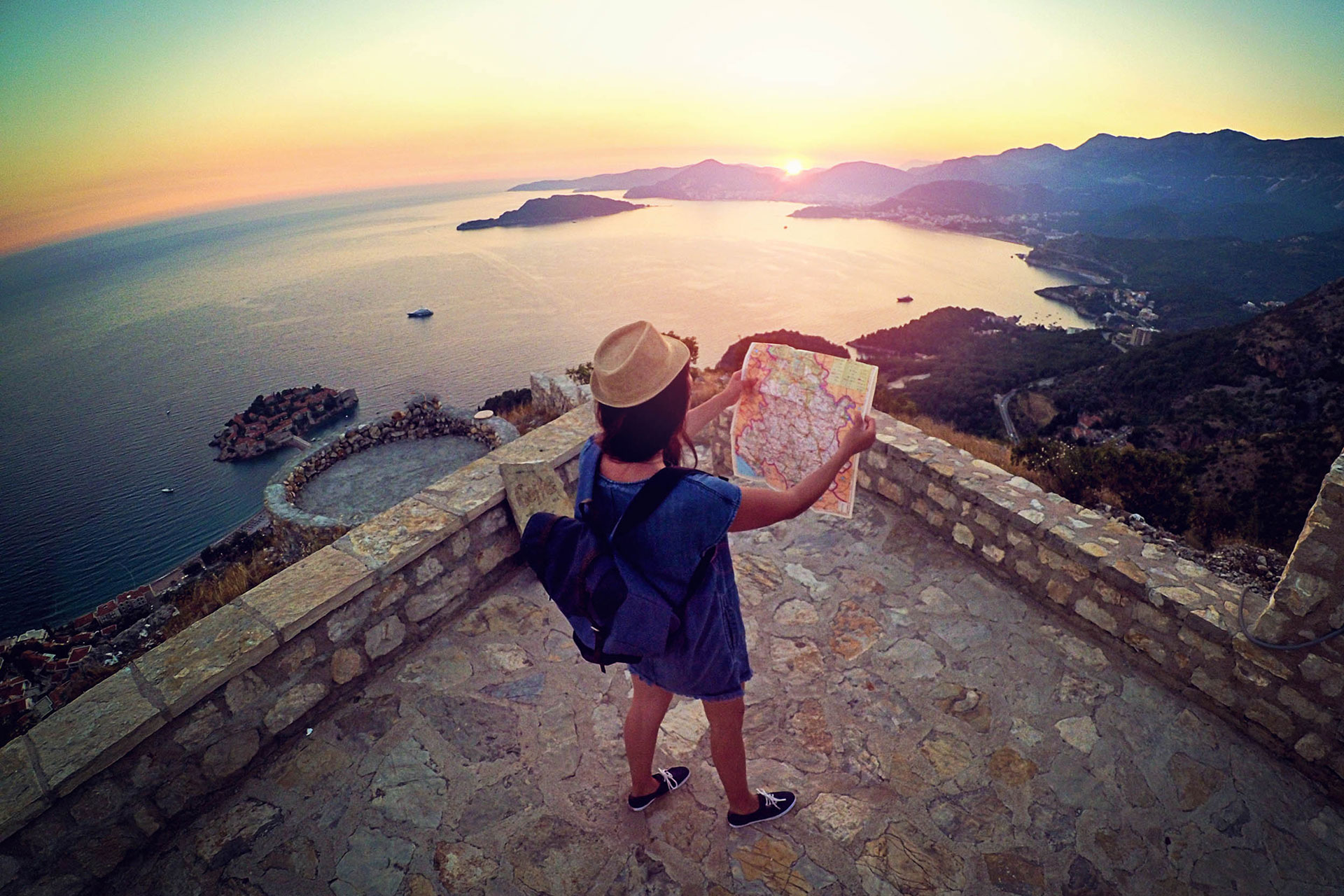
Here is the assignment outline for our the project – About A Place. The intention of this assignment is for you to choose a place that is special to you, anywhere on the planet, and to do an analysis of the specific location.
You are encouraged to choose a place that connects to our space and place unit, but that is not necessarily required. If you would prefer to do an amazing spot that has been created through different forces such as (ex. Beijing- human feature/urban city) or a glacier (created through erosion of ice) that is fine, but the criteria will change somewhat.
You will analyse the place through a human and physical geographic lens. Use the criteria to guide your research.




 Welcome to Mr. Sha's Class!
